G’day, mate! Whether you’re here to work, study, or start fresh, Australia has a lot to offer—stunning beaches, diverse wildlife, laid-back cities, and friendly people.
But like every country, there are some unspoken rules and cultural quirks that’ll help you settle in and avoid awkward moments. Looking back at the lessons learned by thousands of migrants, these small adjustments make the biggest difference in feeling like a local in the modern Aussie landscape.
Here’s an expanded list of 15 Dos and 15 Don’ts for life in Australia, designed to help you navigate everything from the workplace to the weekend “barbie.”
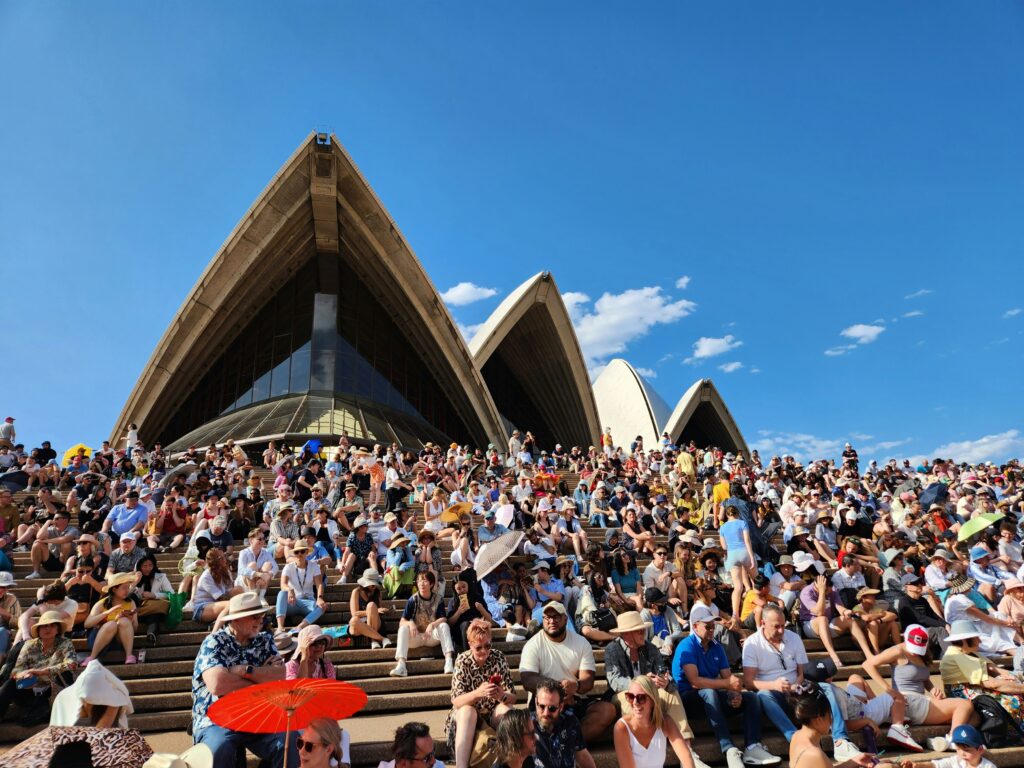
Things you definitely should do in Australia
Always say “please” and “thank you”
Aussies place a high value on egalitarianism, and manners are the oil that keeps the social gears turning.
A simple “cheers” or “ta” (short for thank you) is the standard currency for small favors, like a bus driver letting you on or a barista handing you a flat white. Using these terms shows you respect the person providing the service as an equal, which is a core part of the Australian “Fair Go” philosophy.
Queue up properly
Waiting your turn is a social contract that Australians take very seriously, whether you are boarding a Sydney ferry or waiting for your morning coffee. “Cutting in” is seen as a sign of arrogance and can lead to some very pointed (though often polite) remarks from those around you.
For example, even if a bus stop is crowded and disorganized, people generally keep a mental note of who arrived first and will let them board accordingly.
Wear high-protection sunscreen every day
The Australian sun is famously unforgiving, and by 2026, the public health message has evolved to treat sunscreen as a daily skincare essential, not just a beach item.
Even on overcast days, the UV index can reach dangerous levels, so you should always follow the Cancer Council’s Slip, Slop, Slap, Seek, Slide advice. An example of a “pro move” is checking the UV forecast on your phone before heading out for a 15-minute walk at lunch.
Learn the local shorthand and slang
Australian English is all about efficiency—why say two syllables when one will do? Learning that “arvo” means afternoon and a “servo” is a petrol station will help you follow conversations at the workplace much faster.
For instance, if a colleague asks if you want to “grab a breaky wrap at the gastro-pub,” they are simply inviting you for a breakfast sandwich at a local bistro. For a deeper dive, check out our guide to Aussie lingo.
Greet people casually and warmly
The standard “How ya goin’?” is the universal key to Australian interaction, used by everyone from CEOs to construction workers. It’s rarely an invitation for a detailed medical history; a simple “Good thanks, you?” is the perfect, polite response.
Even in professional settings, starting an email with “Hi [Name],” rather than “Dear Mr./Ms.,” is generally preferred as it builds immediate rapport.
Give local foods a fair go
You haven’t truly arrived until you’ve navigated a classic Aussie meat pie (with plenty of tomato sauce) or a lamington at a community bake sale. When it comes to Vegemite, the secret is to use a tiny amount spread over plenty of butter on hot toast; never eat it by the spoonful like chocolate spread!
Trying these staples—and perhaps a Tim Tam Slam—is a fun way to show your new friends that you are embracing the local food culture.
Master the local recycling system
Australians are increasingly environmentally conscious, and most households now use a three-bin or four-bin system to manage waste.
You should learn which items go in the yellow (recycling), green (organics), and red (landfill) bins to avoid “contamination” fines from your local council.
For example, soft plastics like bread bags often need to go to a specific “Return to Store” bin rather than your home recycling, as detailed by Clean Up Australia.
Tip modestly for exceptional service
In Australia, tipping is a gesture of appreciation rather than a mandatory subsidy for low wages, as hospitality workers are protected by the Fair Work Commission’s minimum wage standards.
If you have a great meal, rounding up the bill or leaving a $5 or $10 note is perfectly fine and highly appreciated. You will often see “tip jars” at cafes, which are a great place to drop your spare gold coins.
Show respect for Indigenous culture
Modern Australia places great importance on acknowledging the Traditional Custodians of the land. You will often hear an “Acknowledgement of Country” at the start of meetings or public events, and it is respectful to listen quietly.
You can use the AIATSIS Map to find out which Aboriginal or Torres Strait Islander land you are standing on, which is a great conversation starter with locals.
Ask if you should take your shoes off
While not every household requires it, many Australians prefer a “shoes-off” policy to keep the house clean from dust and allergens. When visiting a new friend’s home, simply asking “Shoes on or off?” as you enter is a sign of a thoughtful guest. In many coastal areas, you’ll find a pile of “thongs” (flip-flops) at the door, which is a clear hint to leave yours there too.
Carry a reusable water bottle everywhere
Unlike many other parts of the world, tap water in Australia is safe and high-quality. Most public parks and beaches have “bubblers” or refill stations, allowing you to stay hydrated for free while reducing plastic waste. Carrying your own bottle is not just a money-saver; in 2026, it’s seen as the socially responsible thing to do.
Prioritize punctuality
In the Australian business and social world, “being on time” actually means arriving five minutes early. If you are meeting someone for a 10:00 AM coffee and you arrive at 10:05 AM without a text message warning them, it may be seen as disrespectful of their time. This is especially true for job interviews and medical appointments, where the schedule is usually very tight.
Keep to the left in all situations
This is a golden rule that extends beyond the road: always walk on the left side of the footpath and stand on the left side of escalators.
Standing on the right of an escalator in a busy Sydney or Melbourne station will likely result in a polite but firm “Excuse me” from someone trying to pass. Think of it as a mirror to the driving rules—the left side is the “slow” lane and the right is for passing.
Engage with the local sporting passion
Sport is often described as Australia’s national religion, with AFL (Footy), NRL (Rugby League), and Cricket dominating the conversation. Even if you don’t follow the game, knowing which team represents your suburb can help you bond with colleagues and neighbors.
For instance, during “Grand Final” season, the whole city’s mood can shift based on a single game’s result, making it the perfect time to learn the basic rules.
Check fire bans and beach safety daily
Australia’s environment can be hazardous, so checking daily conditions is a vital survival skill. Before lighting a BBQ or heading into the bush, check the Total Fire Ban status for your region to avoid causing a disaster or facing massive fines.
Similarly, at the beach, only swim between the red and yellow flags where lifeguards are watching, as ocean “rips” can be invisible but deadly to the untrained eye.

Don’t Be That Person in Australia
Don’t mock the accent or overuse slang
While Australians are famous for their unique dialect, they generally don’t appreciate people mocking it or “trying too hard” to sound like a local. Using “crikey” in every sentence or putting on a fake accent can come across as patronizing rather than friendly.
It is much better to speak in your natural voice and let a few genuine Aussie terms like “no worries” enter your vocabulary over time.
Don’t expect to see kangaroos in the city center
A common myth is that wildlife roams the streets of major capitals, but you won’t find a kangaroo hopping past the Sydney Opera House. To see them, you generally need to visit a wildlife sanctuary or drive into regional areas at dawn or dusk when they are most active.
An example of a “newbie mistake” is asking a Melbournian where the koalas are kept in the CBD!
Don’t underestimate the power of the sun
Even if the temperature feels cool or there is a breeze, the UV levels in Australia can still be “Extreme.” Sunburn can happen in as little as 10 to 15 minutes during peak hours, and the damage is cumulative over your lifetime. You should check the BOM UV Forecast every morning—if the index is 3 or higher, you need protection regardless of the clouds.
Don’t litter in public or natural spaces
Australians take immense pride in their parks, beaches, and bushland, and littering is considered a major social transgression. Dropping even a cigarette butt or a gum wrapper can lead to significant fines and a very cold reception from locals.
Most public areas have plenty of bins, so there is never an excuse to leave trash behind, especially in National Parks.
Don’t expect 24/7 shopping outside the CBD
While you might be used to late-night malls, many Australian retail shops still close by 5:30 PM on weekdays and 5:00 PM on weekends. “Late Night Shopping” usually only happens on Thursdays or Fridays, depending on your state.
If you need groceries at 9:00 PM, you’ll likely need to find a major supermarket chain, as smaller local shops will have long since shut their doors.
Don’t forget to tap your transport card or phone
Public transport in Australia is strictly “tap-on and tap-off,” and “fare evasion” is a common source of fines for newcomers. Whether you use a physical card like Opal (NSW) or Myki (VIC), or simply use your smartphone/credit card, always ensure you tap at the reader. Ticket inspectors move through trains and buses frequently, and “I forgot” is rarely accepted as an excuse.
Don’t touch the BBQ tongs without an invitation
The “Barbie” is a sacred Australian ritual, and the person operating the grill is the undisputed captain of the ship. Offering to help with the salad or bring another round of drinks is a great move, but taking over the cooking is a major breach of etiquette.
Unless the host explicitly says, “Hey mate, can you watch the snags?”, keep your hands off the equipment and trust the chef.
Don’t walk or stand in designated cycle lanes
In major cities like Brisbane or Perth, cycle lanes are high-speed thoroughfares for commuters on bikes and e-scooters. Walking in these lanes is dangerous for both you and the riders, and you will likely be met with a sharp ring of a bell or a frustrated shout.
Always stick to the pedestrian footpath and look both ways before crossing a green-painted bike lane.
Don’t skip the casual small talk
Australians are generally “chatty” people who appreciate a bit of social lubricant before getting down to business. Whether you are at a job interview or buying a paper, skipping the “How’s your morning going?” can make you seem cold or impatient.
Engaging in 30 seconds of small talk about the weather or the weekend is a simple way to build the “mateship” that Australians value so highly.
Don’t be offended by dry sarcasm or “Aussie banter”
Australian humor is famously self-deprecating and involves “taking the mickey” (teasing) out of those they like.
If a colleague teases you about a small mistake or gives you a cheeky nickname, it’s usually a sign that you’ve been accepted into the group. Don’t take it personally; the best response is a quick smile and a bit of playful banter back.
Don’t assume that everyone is a heavy drinker
While the “drinking Aussie” stereotype persists, there has been a massive cultural shift toward responsible drinking and sobriety. In 2026, most pubs offer a wide range of non-alcoholic beers and spirits that look just like the real thing.
It is perfectly socially acceptable to say “I’m not drinking tonight” or “Just a water for me, thanks,” and you shouldn’t feel pressured to join in on rounds of alcohol.
Don’t ignore the swim safety signs and flags
Australian beaches are beautiful but can be treacherous due to “rips”—strong currents that pull swimmers away from the shore. You should never swim at an unpatrolled beach or outside the red and yellow flags.
If you find yourself in trouble, stay calm, float, and raise one arm to signal for help, as taught by Surf Life Saving Australia.
Don’t assume tipping is a requirement for a “Fair Go”
Because hospitality workers are paid a living wage, you don’t need to add 15-20% to your bill as you would in the United States. While tipping is nice for great service, it’s never an obligation, and you shouldn’t feel guilty for not doing it.
The best way to support a local business is often to leave a glowing 5-star review online rather than a few extra dollars.
Don’t use the phrase “shrimp on the barbie”
This phrase was part of an old tourism campaign for Americans and is almost never used by actual Australians, who call them “prawns.” Using this cliché makes you stand out as a tourist immediately and can be a bit cringe-worthy to locals. If you want to talk about BBQ seafood, just ask if they’re “tossing some prawns on,” and you’ll sound much more like a local.
Don’t dive into politics or religion during a first meeting
Aussies tend to keep casual conversations light and avoid “heavy” or “confrontational” topics until they know someone well. Bringing up polarized political issues or strong religious views at a casual Sunday BBQ can make people feel uncomfortable.
It’s better to stick to topics like travel, food, work, or sport until you’ve established a solid friendship with your new mates.
So there you have it—your masterclass in surviving (and thriving) in the land of Vegemite, vicious magpies, and dangerously casual greetings. Follow the dos—be polite, wear sunscreen like it’s your second skin, and never underestimate the power of a “cheers, mate.” Dodge the don’ts, respect the land, and you’ll find that Australia is one of the most welcoming places on earth.
