When we talk about Overseas Filipino Workers, we usually think of remittances, sacrifices, and long-distance parenting. But sometimes the stories are clearer and louder: acts of instant courage that cost everything.
Hong Kong — a city that depends on hundreds of thousands of foreign domestic helpers — has seen more than one example of Filipinos putting another life before their own. This article shares stories of such heroism, gives context (how many helpers live in Hong Kong and why they matter), and provides sources you can check if you want to learn more or share with family back home.

Hong Kong is home to roughly 368,000 foreign domestic helpers, the majority from Indonesia and the Philippines. These workers are essential to many households but often live in cramped conditions and have limited safety nets.
When disasters happen, domestic helpers are among the particularly vulnerable groups: they live with employers, sometimes sleep in the flats they work in, and may have limited escape options.
Hero story 1: Rhodora Alcaraz (Tai Po, November 2025)
During the catastrophic Wang Fuk Court (Tai Po) fire in late November 2025, multiple news outlets reported that a Filipina domestic worker, identified by Philippine authorities as Rhodora Alcaraz, was among those who sheltered and protected a three-month-old baby while smoke and flames filled the flat.
She was later taken to hospital in critical condition but survived; the infant also survived. The fire became one of Hong Kong’s deadliest in decades and drew attention to the vulnerability of domestic workers living in multi-storey residential blocks.
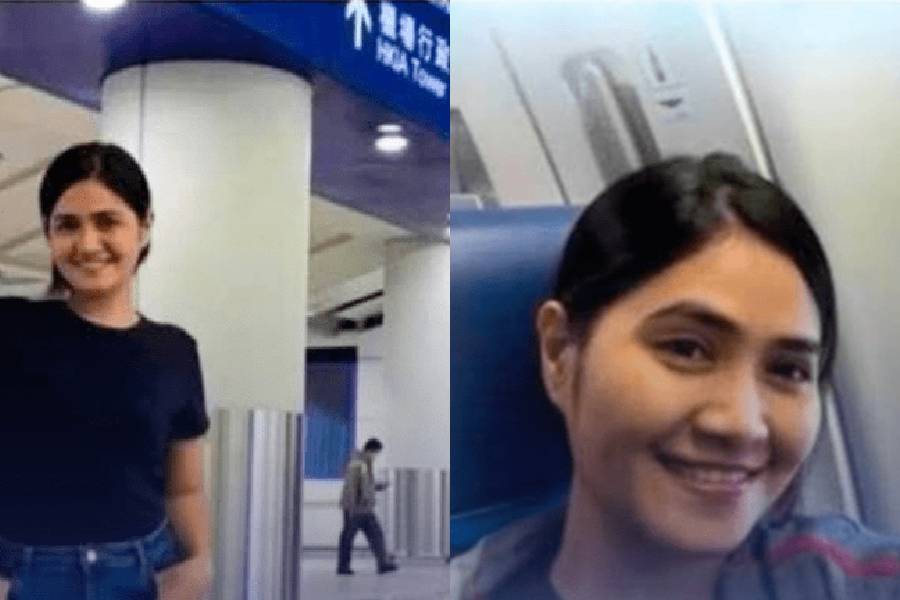
Rhodora’s action follows a pattern we’ve seen before — helpers instinctively protect children and elderly people under their care. Her story has been honoured by the Philippine government agencies in Hong Kong (consular staff, OWWA), and it has opened public conversations in both Hong Kong and the Philippines about workplace protections, emergency preparedness, and how employers can better ensure safe living arrangements for helpers.
Hero story 2: Juanita Agustin Limbago (Kowloon Tong, June 2011)
In June 2011, the Philippines and Hong Kong media reported that Juanita Agustin Limbago, a Filipina domestic worker, died after throwing herself in front of a bus to shield a six-year-old boy she was taking to school. The child survived with minor injuries; Limbago did not. The case received national attention in the Philippines and led to government assistance for the family, including help from OWWA.

Juanita’s sacrifice is not an isolated, dramatic headline — it is part of a long history of caregivers who consider the children in their charge as their own for the time they are entrusted with them. Her case also shows how the Philippine government’s welfare agencies have historically provided assistance to families of OFWs who die in tragic circumstances abroad.
Government assistance
In both 2011 and 2025 cases Philippine government agencies — the Overseas Workers Welfare Administration, the Department of Migrant Workers, and the Philippine Consulate General in Hong Kong — acted to locate the worker’s kin, provide medical or repatriation assistance, and public updates. For the latest OWWA advisories or to request help, families should contact the OWWA regional office or the Philippine Consulate in Hong Kong.
| Name | Year | Place | Act of heroism | Outcome |
|---|---|---|---|---|
| Rhodora Alcaraz | 2025 | Wang Fuk Court, Tai Po, Hong Kong | Shielded a 3-month-old infant during a multi-floor residential fire | Hospitalised (ICU); infant survived; consular and community support |
| Juanita Agustin Limbago | 2011 | Kowloon Tong, Hong Kong | Jumped in front of a bus to protect a 6-year-old ward | Died; child survived; OWWA assistance for family |
Community and church support
Filipino communities and churches in Hong Kong frequently provide emergency shelter, counselling, and fund drives after disasters. If you are researching or helping a family, reach out to known Filipino community centres and parish groups in Hong Kong for fastest on-the-ground support.
After a disaster, helpers may lose personal documents (ID cards, passports). Hong Kong Immigration has arranged shuttle assistance and temporary measures in past incidents; the PH Consulate helps replace lost documents and coordinate hospital visits.
To our kababayan in Hong Kong and the families watching from the Philippines: these stories are painful and prideful at once. They remind us that OFWs are more than income generators — they are people who care for other people’s children and elderly as if they were their own. That love sometimes shows up in the most extreme moments.
If you are a family member researching one of these cases, use the links above and contact the Philippine Consulate General in Hong Kong, they are the official channel for verification and assistance. If you are an employer or an agency, please ask: are we providing safe living quarters? Do we have an escape plan?
If you are a reader moved by these stories, consider actions you — and your community — can take: register emergency contacts, support community funds, and push for safer housing and legal protections for domestic workers.
These are hero stories — yes — but they are also a mirror. We owe it to Juanita, to Rhodora, and to every helper who quietly supports a household far from home, to make sure their courage is met with care and better protection.
