When a Filipino makes the life-changing decision to work overseas, the journey goes far beyond signing a contract or boarding a plane. At the center of this journey lies one of the most personal questions an overseas Filipino worker must answer: Do I go alone, or do I bring my family with me?
For many, this is not a simple yes-or-no choice. It touches sensitive areas of life—financial security, marriage, parenting, mental well-being, and long-term dreams. This article carefully explores that question, weighing the realities of working abroad solo against the challenges and rewards of migrating together with family.
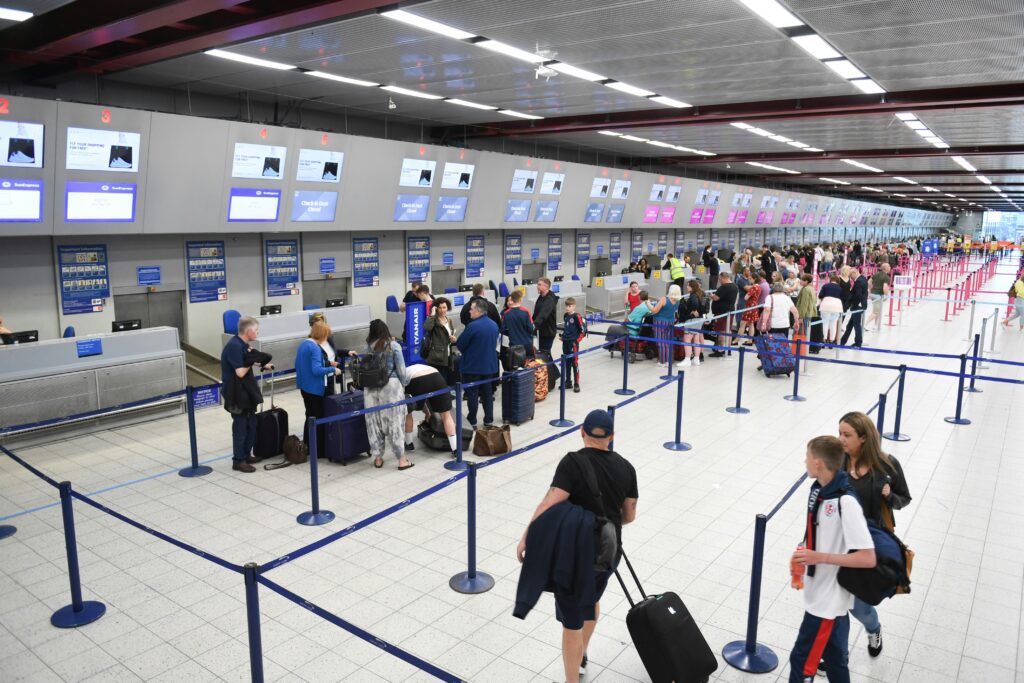
According to the Philippine Statistics Authority, around 1.96 million Filipinos worked overseas in 2022, but a majority of them worked alone, and left their families back home. Behind these big numbers are quiet, personal decisions about how to live, love, and raise a family across borders.
Solo migration: working abroad without family
For countless OFWs, especially those on fixed-term contracts in the Middle East, East Asia, or Europe, leaving family behind is often the more practical decision. Solo migration can maximize income and reduce risk in the early years abroad.
Financial advantages of going alone
Living alone abroad is usually much cheaper than supporting a full household in a foreign country. A single room or shared accommodation often costs a fraction of the rent for a family-sized flat, especially in major cities where housing is a huge expense.
Other costs also stay lower:
- Food and daily essentials are simpler and cheaper when cooking for one.
- Transport expenses are smaller with only one commuter.
- Health-related costs and insurance are more manageable when only one adult is covered.
Because of this, many solo OFWs can:
- Save more aggressively for a house, education fund, or business back home.
- Pay down existing loans faster.
- Send a larger share of income directly to family in the Philippines.
For OFWs who carry debts, tuition responsibilities, or big financial goals, these savings can make the difference between just surviving abroad and actually moving forward.
Faster adjustment and focus
Adjusting to a new country demands energy: learning new systems, understanding work culture, managing language differences, and navigating laws and bureaucracy. Going alone means the OFW can focus completely on:
- Surviving and performing well at work.
- Learning the host country’s culture and systems.
- Building a stable routine before taking on extra responsibilities.
Without the added worry of a spouse’s adjustment or children’s schooling, many solo OFWs find they can think more clearly about their finances and long-term plans.
Emotional and relationship costs of going solo
However, solo migration carries a heavy emotional price that is often invisible in financial spreadsheets.
Distance, loneliness, and parenting from afar
Homesickness is one of the most painful realities OFWs face. Weekends, holidays, Christmas, New Year, and family milestones can feel especially empty when celebrated alone. Video calls, while incredibly helpful, cannot fully replace:
- Hugging your children after a long day.
- Attending school events or birthdays.
- Sharing daily moments with a spouse or parents.
For OFW parents, this distance can lead to:
- Guilt for missing milestones and daily parenting.
- Difficulty maintaining closeness with children as they grow older.
- Misunderstandings if children feel abandoned or resentful over time.
Studies on transnational families show that long separation can affect children’s behavior, emotional security, and academic performance, especially when communication and expectations are not managed well.
Strain on marriages and mental health
Long-distance marriages demand a high level of trust and intentional communication. Time zone differences, stress at work, and poor internet connections can easily lead to miscommunication and unresolved conflicts, jealousy or insecurity on either side, emotional distance and sometimes marital breakdown.
On top of this, isolation abroad can increase risks of anxiety and depression, burnout from juggling work stress without nearby emotional support.
This also tempts lonely OFWs into unhealthy coping habits like overspending, substance use, or risky relationships.
Solo migration may make financial sense, but emotionally, it is demanding and requires strong support systems and coping strategies.
Bringing the family abroad: unity and shared journey
On the surface, bringing your family abroad looks like the ideal option. Families stay together, avoid long separations, and share both the struggles and victories of life overseas.
Emotional security and everyday togetherness
Having your family beside you abroad offers benefits that money cannot easily measure:
- Emotional support on difficult days at work.
- Daily bonding—meals together, bedtime routines, weekends out.
- Stronger family unity because everyone shares the same environment and challenges.
Children, in particular, can gain access to better public services in some countries, such as modern healthcare and advanced education systems.
They are also exposed to different cultures, languages, and perspectives, and gain chances at permanent residency or citizenship that may open doors later in life.
For many OFWs who bring their families, the biggest reward is peace of mind. They can earn a living and still be physically present for their spouse and kids, instead of watching them grow up only through photos and chat apps.
Long-Term settlement and opportunities
In countries like Canada, Australia, or New Zealand, family migration is often tied to pathways toward permanent residency and citizenship. (Canada has recently reduced its overall permanent resident targets and paused new applications for the Parent and Grandparent Program (PGP) as of January 1, 2026, to manage existing backlogs.) When the income is sufficient and the visa allows family reunification, this can mean:
- Long-term security for the whole family.
- A chance to build roots and stability in one country.
- Greater opportunities for children in education and careers.
For OFWs who dream not just of sending money home but of fully relocating and starting a new chapter, bringing the family abroad can be a meaningful and strategic choice.

The high cost and pressure of family migration
Despite its emotional rewards, migrating with family is not a simple or cheap decision.
When a whole family moves abroad, almost every cost multiplies:
- Rent: A family-sized apartment is much more expensive than a bed space or studio.
- Food: Groceries and utilities rise with each additional family member.
- Education: School fees, uniforms, books, and sometimes private tuition add up.
- Healthcare: Insurance or out-of-pocket medical expenses for children and spouse can be significant.
Many surveys of OFW households show that the number one barrier to bringing family abroad is the high cost of living in host countries, compared to how far the same income can stretch in the Philippines.
The result is that savings may grow much more slowly, investments back home may be delayed. Also, financial pressure on the breadwinner intensifies, especially if only one adult is allowed or able to work.
Bureaucracy and visa limitations
Immigration policies strongly affect whether family migration is even possible. Rules differ widely:
Some Middle Eastern countries allow dependents only for higher-income workers or specific job categories, and often under strict sponsorship rules. Other countries restrict spouses from working, making the OFW the sole earner.
Immigration-heavy countries like Canada, Australia, or New Zealand may allow family reunification but require proof of sufficient income, language skills, and sometimes points-based qualifications.
Securing dependent visas, renewing permits, and complying with regulations can be time-consuming, stressful, and expensive. For OFWs on short-term or unstable contracts, uprooting the family into such uncertainty may be too risky.
Cultural adjustment for the whole family
While one adult may adapt relatively quickly to a new culture, children and spouses can face:
- Language barriers and difficulty making friends.
- Bullying or discrimination at school.
- Loss of familiar support systems like grandparents, cousins, and long-time friends. Although digital support systems are increasingly used to mitigate this loss, “digital proximity” cannot replace the physical presence of a support network in times of crisis or for daily logistical needs.
If the non-working spouse cannot find a job or is not allowed to work, they may feel isolated, underutilized, or dependent, which can strain the relationship. The breadwinner, meanwhile, carries the heavy burden of being the sole provider in a foreign environment where losing a job could jeopardize the entire family’s stability.
Key Questions to Help You Decide
Because no two families are the same, there is no universal formula. However, certain questions can help you think more clearly about whether to go solo or bring your family.
1. How stable and sufficient is your income?
Ask yourself:
- Is your salary enough to support family-level living costs in the host country while still allowing reasonable savings?
- How stable is your job? Is it short-term, project-based, or has a clear path to renewal or permanency?
If the income barely covers basic needs for a family abroad, going solo first may be more practical.
2.What are the host country’s immigration and family rules?
Research the following:
- Visa options for dependents and how difficult they are to secure.
- Whether your spouse can legally work.
- Requirements for children’s schooling and health insurance.
Some countries are designed for long-term family settlement; others are more suited to temporary labor migration.
3. What are your long-term goals?
Clarify your bigger picture:
- Is your plan to work abroad for a few years, save aggressively, then return home?
- Or is your dream to settle permanently overseas and give your children a future there?
If the goal is strictly short-term financial gain and your contract is limited, solo migration might make more sense. If you aim for permanent residency or citizenship, calculating when and how to bring your family becomes essential.
4. How will your children be affected?
Consider both scenarios:
- If they stay: How will they cope with your absence? Who will provide day-to-day emotional and parental guidance?
- If they move: Can they adapt to a new language, school system, and culture? How will they feel being far from extended family?
Children’s emotional and developmental needs should be at the center of the decision, not just seen as an afterthought.
5. Do you have a support network abroad?
OFWs with relatives, close friends, or a strong Filipino community in the host country often find it easier to:
- Settle their families.
- Find childcare, advice, and emotional support.
- Navigate emergencies and challenges.
Without such a network, both solo workers and migrant families can feel more isolated and vulnerable.
Start alone, then decide
Many OFWs choose a middle path instead of an immediate, all-or-nothing decision. A common strategy is o abroad alone first for one or two contract cycles.
Focus on:
- Stabilizing employment and legal status.
- Building savings and emergency funds.
- Studying immigration rules and options.
After gaining stability, carefully reassess whether income and job security are strong enough to support the family abroad. Also check whether the host country offers realistic long-term pathways for the whole family.
Others intentionally decide to keep the family in the Philippines for good, using overseas income to build a home, fund education or start a business, and prepare for a planned return and retirement back home.
The important thing is clarity: Is this migration primarily a temporary financial mission, or a long-term relocation plan? The answer often determines whether it is wise to bring family sooner, later, or not at all.
Redefining “Success” for OFWs
In the end, there is no one “right” answer that fits every OFW. Each story is shaped by unique combinations of:
- Financial capacity.
- Career opportunities.
- Family dynamics.
- Emotional readiness and mental health.
- Immigration rules of the host country.
What matters is that the decision is made consciously, with open conversations at home, realistic expectations, and a clear plan.
Success as an OFW should not be measured only by how much money is earned or how big the house is back in the Philippines. True success includes strong and honest relationships, wise financial management and sustainable plans, and emotional resilience and mental well-being.
As you weigh whether to work abroad alone or bring your family with you, remember: this is not just a question about visas and salaries, but about the kind of life you want to build—for yourself and for the people you love.