Moving into an Australian home often means meeting three coloured wheelie bins before you meet your neighbours. These lid colours follow national standards: red for general waste, yellow for mixed recycling, and lime green for organics, though some councils also use other colours such as blue or burgundy for extra streams. Learning what goes where is more than a nice-to-have; incorrect sorting can contaminate recycling, lead to rejected loads, and even attract fines.
Beyond the practicalities, bin habits have real environmental consequences. Putting the wrong items in the wrong bin increases landfill, wastes resources, and adds pressure to already-stretched waste systems, while correct sorting helps recover materials and reduces greenhouse gas emissions from decomposing rubbish.
What goes in red, yellow and green
Across most of Australia, household waste is broadly divided into three main kerbside bins:
- Yellow lid – Recycling: Clean paper and cardboard, glass bottles and jars, rigid plastics, and metal cans generally belong here, but precise rules differ by council. Items should be empty, rinsed, and loose (not in plastic bags) so sorting facilities can process them.
- Red lid – General waste: Non-recyclable and non-compostable items such as contaminated packaging, nappies, broken household items, and many soft plastics go in this bin. Hazardous items (batteries, chemicals, e‑waste) never belong in red-lid bins.
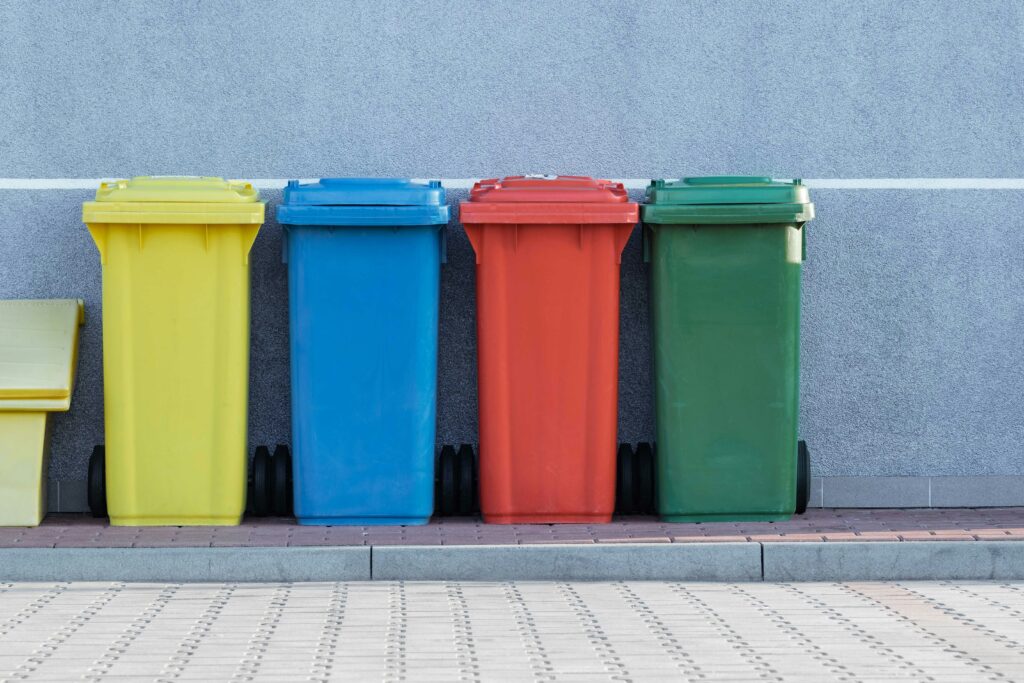
- Green or lime-green lid – Organics: Garden clippings, grass, leaves, and, in many councils, food scraps and compostable paper go here, although exact rules vary. Some areas treat green bins as “garden only”, while others accept combined food-and-garden organics.
The aim is to divert as much as possible from landfill by sending recyclables to material recovery facilities and organics to composting or digestion. Container deposit schemes in several states add another layer, allowing certain cans and bottles to be returned for a refund instead of going in kerbside recycling.
Bio-bags, extra bins and council help
Many councils now support food and garden waste separation by offering kitchen caddies and compostable bio-bags for use with green organics bins. These aerated caddies and liners help contain smells, keep benches clean, and make it easier to transfer scraps to the outdoor bin between collections. Availability and rules differ, so residents are encouraged to check their council’s website, visit a service centre, or contact customer service to request caddies or bags.
If your household size or habits change, councils often allow you to request differently sized bins or add an extra recycling or organics bin for an additional fee, and some offer upgrades for recycling at low cost to encourage diversion. Keeping lids closed, cleaning bins periodically, and placing them correctly at the kerb also helps avoid pests, spills, and missed collections.
Collection schedules and common mistakes
Collection schedules vary significantly between councils and suburbs. A common pattern is weekly red-lid (general waste) collection and fortnightly yellow and green-lid collections on alternating weeks, but some councils collect organics more frequently or run different systems for units and rural properties. Because of this variation, it is important to check the local calendar, use council apps or reminders, and bring bins in promptly after collection to comply with local bylaws.
Common contamination mistakes include putting plastic bags, soft plastic wrappers, polystyrene, nappies, or food-soiled containers into yellow recycling bins, and placing plastics, metals, or treated timber into green organics bins. To keep recycling streams clean, containers should be rinsed, cardboard flattened, and items placed loose in the bin; hazardous waste, e-waste, batteries, paint, and chemicals should be taken to designated drop-off points rather than any household bin.
Hazardous waste, hard rubbish and community programs
Standard kerbside bins are not suitable for hazardous or special waste streams. Items such as batteries, old electronics, fluorescent tubes, paints, solvents, motor oil, gas bottles, and garden chemicals need specialised treatment and are generally accepted only at dedicated transfer stations, depots, or scheduled hazardous-waste collection events organised by councils or state programs. Using these channels protects workers, prevents toxic substances entering soil and waterways, and avoids fines for improper disposal.
Most councils also provide periodic hard rubbish or “bulk waste” collections for large items such as furniture, mattresses, and whitegoods that do not fit in wheelie bins. Many run reuse or “tip shop” initiatives for still-usable goods and host e-waste and problem-waste drop-off days, often promoted through council websites, newsletters, and social media. Participating in local clean-up events, creek restorations, or litter picks is another practical way residents can support cleaner neighbourhoods and healthier ecosystems.
Different rules across states and councils
While bin lid colours broadly follow Australian standards, what each council accepts can differ, especially for trickier items like soft plastics, pizza boxes with grease, or specific plastic types. Some Victorian councils, for example, have introduced separate purple-lid bins for glass, while several states encourage or phase in combined food-and-garden organics in green or lime-green bins rather than garden-only services.
Because of this patchwork, residents are best served by checking local guidance rather than assuming rules from another area apply. Council websites typically provide printable “what goes in each bin” guides, A–Z disposal lists, service maps, and contact details, and some offer translated materials or visual guides tailored to new migrants and renters.
Cutting down your red-bin waste
Sorting correctly is the foundation, but reducing overall waste makes the biggest long-term difference. Home composting of food scraps and garden waste can significantly shrink red-lid volumes and provide nutrient-rich compost for gardens and pot plants. Choosing products with less packaging, buying loose produce, using reusable bags and containers, and avoiding single-use items all help reduce what ever needs to go in any bin.
Labelling indoor bins for recycling, organics, and general waste, especially in larger or shared households, helps everyone build consistent habits. Some households even track their red-bin output over time as a simple way to measure progress; smaller general waste volumes usually mean more effective recycling and organics diversion and can, in some areas, lower waste charges where councils price larger or extra red bins.
Why proper sorting matters for Australia
Australia generates tens of millions of tonnes of waste each year across household, commercial, industrial, and construction streams, with national estimates around 75.6 million tonnes in 2022–23, or roughly 2.9 tonnes per person. While around two-thirds of total waste is now recycled or recovered, significant volumes still end up in landfill, including materials that could have been repurposed, recycled, or composted.
Queensland’s recent reporting illustrates both progress and remaining challenges: about 57.1% of “headline” wastes were recovered in 2023–24, but municipal (household) diversion sat at only 28.3%, well below future targets. Every correctly sorted yoghurt tub, pizza box, or armful of garden clippings helps reduce landfill pressure, cut methane emissions from decomposing organics, and protect waterways and wildlife from pollution.
Practical next steps for residents
For anyone new to Australia—or anyone who has never quite been sure about a greasy pizza box—the most reliable first step is to visit the local council’s waste and recycling page and download or bookmark bin guides and calendars. Talking to neighbours, joining community or council-run social media pages, and watching out for mailouts on service changes will keep you updated on new bins, collections, or programs.
If green organics services are limited, consider starting a compost bin, worm farm, or bokashi system at home. If your household frequently overfills recycling or organics bins, ask the council about extra or larger bins, and if you generate many food scraps, enquire about caddies and bio-bags. Over time, consistent sorting habits become second nature—and each correct choice at the bin contributes to a cleaner street, a healthier environment, and a more sustainable Australia.
