Summary
- Rewards programs can save money, but only when used intentionally — not as a reason to spend more.
- Most points are worth far less than people assume, and behaviour‑shaping tactics often lead to overspending.
- The smartest strategy is to focus on one or two programs, redeem points regularly, and avoid fees or habits that quietly erode value.
You’re at the checkout juggling groceries, kids, or a quick lunch when the cashier asks, “Do you have a rewards card?” For a moment you wonder if you’re missing out on free savings, free flights, or free coffees.
Rewards programs are everywhere in Australia — supermarkets, petrol stations, airlines, banks, cafes, pharmacies and fashion retailers — and it can feel like everyone has a card or app except you.
Finder reports that 91% of Australians are part of at least one rewards program.
Rewards can genuinely save money, but only if you understand how they work and use them intentionally. This guide breaks down the main types of rewards programs, how points are earned and redeemed, common traps, and how to decide when rewards help your budget and when they quietly hurt it.
| Use Rewards If… | Avoid/Ignore If… |
| You were going to buy the item anyway at that specific store. | You are “shopping around” just to find a store that takes your card. |
| You use “Boosters” on weekly essentials (milk, bread, fruit). | The reward requires a “minimum spend” higher than your usual budget. |
| You pay your credit card balance in full every month. | You are paying interest on a “Rewards Credit Card” (interest usually outweighs points). |
| The rewards are “liquid” (e.g., $10 off your shop). | The rewards are “aspirational” items you don’t actually need. |
What rewards programs really are
Rewards programs are loyalty systems that give you points, discounts, or perks in exchange for repeat business. Coles’ Flybuys and Woolworths’ Everyday Rewards are two of the biggest programs, offering points when you shop at supermarkets and partner retailers like fuel stations and liquor stores.
Airlines such as Qantas and Virgin Australia run frequent flyer programs that reward travel and spending through linked credit cards and shopping partners.
The business logic is simple: these programs encourage you to return to the same brands, spend more per visit, and allow companies to collect detailed data on your habits. The key mindset shift is this: rewards are not free money. They are funded by the prices you pay and by how your behaviour changes. You only win if you use the program on things you would buy anyway.
Common rewards programs in Australia
Most rewards programs fall into a few major categories:
- Supermarket rewards: Everyday Rewards and Flybuys, typically 1 point per dollar, with 2,000 points worth $10.
- Airline frequent flyer programs: Qantas and Velocity, earning points from flights, credit cards, and partners.
- Credit card rewards: bank-branded points, Qantas/Velocity co-branded cards, and cashback cards.
- Petrol and transport programs: fuel discounts and points at service stations and transit partners.
- Retail and lifestyle programs: fashion, chemists, electronics, cafes, and more.
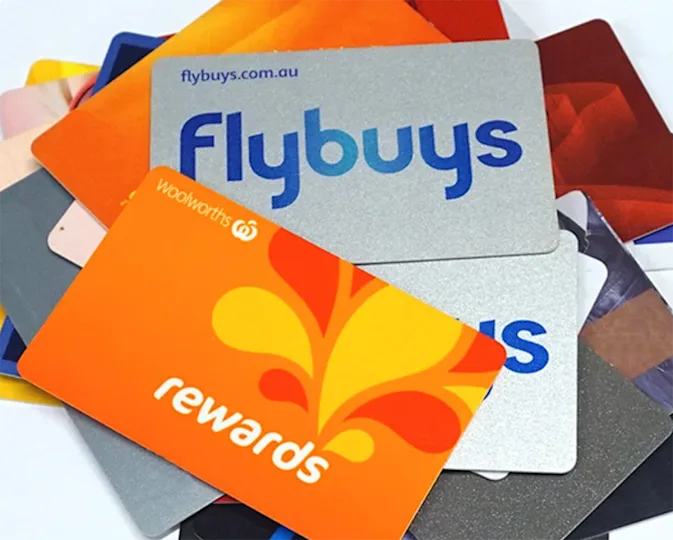
Typical supermarket earn rates
| Program | Base earn rate | Value |
|---|---|---|
| Everyday Rewards | 1 point per $1 | 2,000 points = $10 |
| Flybuys | 1 point per $1 | 2,000 points = $10 |
A typical household spending $152 a week might earn around 7,900 points a year — roughly $30 of value without promotions.
How points are actually earned
Most programs use simple structures like 1 point per dollar spent. The real accelerators are bonus offers: “spend $50 to earn 1,000 bonus points,” “shop three weeks in a row,” or “activate this targeted offer.” These can dramatically increase earn rates but are designed to change your behaviour — pushing you to spend more or buy specific brands.
Base earn rates often translate to only 0.5% to 1% of spend in value. If you spend $200 and earn points worth $1 or $2, it’s a nice bonus, but not a reason to overspend.
How point redemption works
Redemption value varies widely depending on what you choose:
- Supermarket programs: points convert to fixed-value discounts or gift cards.
- Airline programs: flights and upgrades can offer high value, but merchandise and “pay with points” options are usually poor value.
- Credit card programs: value depends on transfer rates, fees, and redemption choices.
Airline redemptions often come with surcharges, limited availability, and blackout periods. Points inflation — where programs increase the number of points needed for rewards — reduces long-term value. Using points regularly for simple, high-value rewards is often better than hoarding them.
The psychology behind rewards
Rewards programs are built on behavioural science. Points feel like a prize, making spending feel less painful. People often overspend to hit thresholds like “spend $100 to earn 5,000 bonus points,” even if they planned to spend $60. The sunk cost fallacy also appears: once you’ve built a balance, you may stick with a brand even when another retailer is cheaper.
| Trigger | Behavioral Effect |
| Medium Maximisation | People focus on the points (the medium) rather than the actual value, leading to irrational choices. |
| Goal Gradient | Spending increases as the consumer gets closer to a “bonus points” or “status” threshold. |
| Loss Aversion | The fear of losing points or “status” outweighs the potential savings of shopping elsewhere. |
| Dopamine Loops | “Gamified” notifications (e.g., “You’re only $10 away!”) trigger reward-seeking behavior in the brain. |
Being aware of these psychological levers helps you stay in control.
Common myths about rewards programs
- “I’m saving money because I earn points.” Only true if you buy things you genuinely need at competitive prices.
- “Everyone should have a rewards credit card.” High annual fees and interest rates mean these cards only work for people who pay balances in full.
- “Points never expire.” Many programs now have inactivity rules or devalue points over time.
- “More programs mean more benefits.” Scattered balances often mean less value.
Credit card rewards: high potential, high risk
Rewards credit cards can be lucrative for high spenders who pay balances in full every month. But they often come with annual fees of $200–$1,400 and higher interest rates. The only way these cards make sense is if your annual points value exceeds the annual fee and you never pay interest.
If a rewards card tempts you to overspend or you sometimes miss payments, the card becomes an expensive habit rather than a financial tool.
Frequent flyer programs: who benefits most
Frequent flyer programs reward people who either fly often or channel large amounts of spending through partners. Seat availability for points flights can be limited, especially during peak periods. Taxes and surcharges still apply, sometimes costing hundreds of dollars.
Points offer the best value when redeemed for flights you would have paid cash for — not for merchandise or low-value redemptions.
Rewards for families and shared households
Many programs allow family pooling or household sharing of points. Using one supermarket program consistently and stacking occasional targeted offers can deliver modest but real savings. Teaching kids that points are a bonus — not a reason to buy more — helps build healthy money habits.
Privacy, data, and fine print
Loyalty programs collect detailed information on what you buy, when, and how often. The Australia Loyalty Programs Market Report notes strong growth in AI-driven targeting and increased scrutiny around data privacy. It’s worth reviewing terms and conditions, adjusting marketing preferences, and pruning unused memberships to reduce your digital footprint.
How to use rewards programs smartly
- Pick one or two core programs that match your lifestyle.
- Don’t change what you buy just to earn points.
- Redeem points regularly for high-value rewards.
- Review credit card fees and benefits annually.
- Simplify if tracking deals becomes stressful.
Tips for new migrants and first-time users
Rewards programs in Australia can feel overwhelming. Start small: choose one supermarket program and ignore the rest until your budget and routines settle. Avoid complex rewards credit cards early on. Focus on understanding local prices and building a stable budget before layering rewards on top.
Final thoughts
Rewards programs can be useful tools, but only when used intentionally. Points and discounts can ease grocery bills or fund a holiday, but they are paid for by your spending and your data.
Ask yourself whether your rewards are working for you or whether you’re working for them. Review your memberships, check how much value you actually redeemed last year, and decide which programs genuinely support your financial goals.
If this guide helped you see rewards programs more clearly, consider sharing it with someone who loves points or could use a clearer strategy. Smart rewards aren’t really about points — they’re about choice and control.
