Summary
- Wise, Remitly, and RBC dominate the 2026 remittance landscape for Filipinos in Canada, each offering different strengths.
- “Zero-fee” marketing is everywhere, but hidden exchange rate markups still affect the real cost.
- The best app depends on your recipient’s setup: bank account, cash pickup, or mobile wallet.
- Wise is best for transparency, Remitly for speed and cash pickup, and RBC for high-value transfers.
- This guide explains everything in simple, practical terms for Filipino workers and families.
The remittance landscape in Canada
Sending money home is one of the most important responsibilities for Filipinos working in Canada. Whether you are a caregiver in Toronto, a farm worker in Manitoba, a hotel staff member in Alberta, or an engineer in British Columbia, remittances are part of your monthly routine. Families depend on it for bills, tuition, groceries, and emergencies.
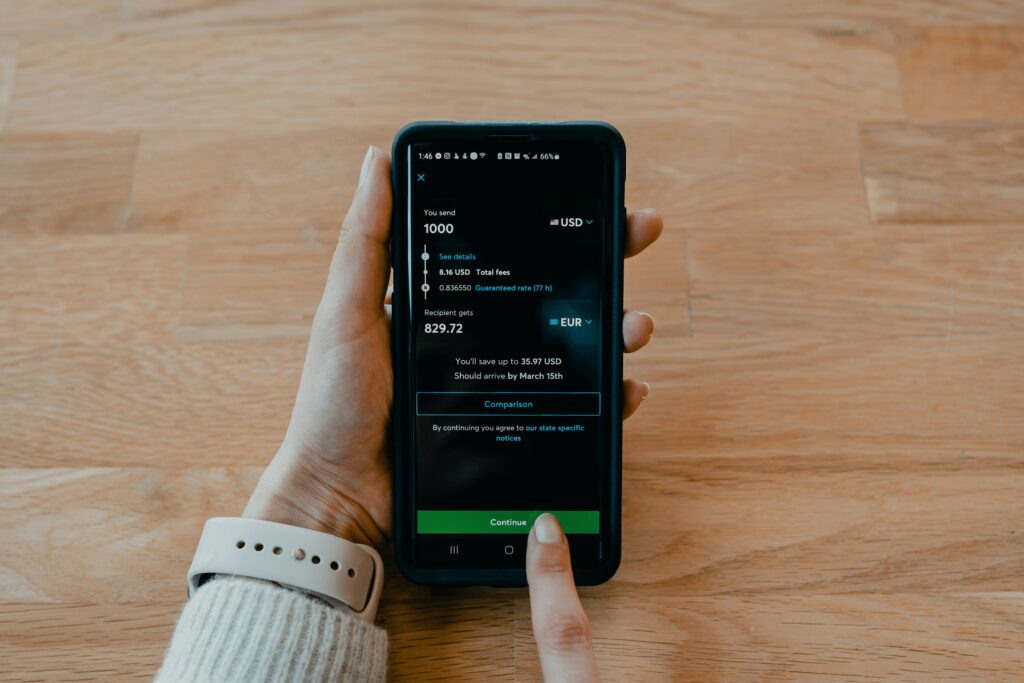
But the remittance world in 2026 looks very different from just a few years ago. Competition has exploded. Banks and apps now advertise “zero fees,” “instant transfers,” and “best exchange rates.” For beginners, it can feel overwhelming.
This guide breaks everything down in clear, friendly language, so you can choose the best remittance app for your situation.
The state of the market
Almost every major bank and fintech app in Canada promotes “zero-fee transfers.” This sounds great, but it does not mean the transfer is truly free.
According to the Financial Consumer Agency of Canada, the exchange rate you receive is rarely the ‘real’ one seen on news sites. Major banks like RBC have pivoted to $0 transaction fees, but data from transparency advocates like Wise indicates that the average Canadian still pays roughly 5–7% in total costs once the exchange rate spread is factored in.
Companies have shifted from charging upfront fees to earning money through exchange rate markups.
This means two things:
- You may pay no transaction fee, and
- You may lose more money in the exchange rate.
For example, if the real exchange rate is 1 CAD = 42 PHP, a provider might offer 1 CAD = 40 PHP. That 2-peso difference is the markup.
The hidden fee reality
There are two main types of costs when sending money:
- Upfront fees
What you see before sending (for example, $2.99 per transfer). - Exchange rate markup (spread)
The difference between the real rate and the provider’s rate.
Many overseas workers focus only on the upfront fee, but the markup often costs more, especially for large transfers.
Why the “best” app depends on your recipient
The right app depends on how your family receives money:
| Recipient setup | Best option |
|---|---|
| Bank account | Wise or RBC |
| Cash pickup | Remitly |
| Mobile wallet (GCash, Maya) | Remitly |
| Rural areas with limited banking | Remitly |
| Large transfers (tuition, property, savings) | Wise or RBC |
There is no universal “best” app—only the best app for your situation and your recipient’s reality.
Wise (the precision specialist)
Wise is known for its transparency. It uses the mid-market exchange rate, which is the real rate you see on Google, with no hidden markup.
Core value proposition
- Mid-market rate with zero markup
- Clear, predictable fees
- Fast bank-to-bank transfers
- Multi-currency account for global use
2026 updates
- Interac e-Transfer integration: You can now fund transfers instantly from your Canadian bank.
- Tiered pricing: Lower fees for transfers above $35,000 CAD.
- Improved speed: Many transfers to the Philippines arrive within minutes.
Pros
- Most transparent pricing
- Best for large transfers
- Multi-currency account for savings or travel
- Fast bank-to-bank transfers
- No promotional gimmicks—what you see is what you get
Cons
- Higher fees for credit card funding
- No cash pickup
- No home delivery options
Best for
- Engineers sending tuition payments
- Caregivers sending monthly savings
- Factory workers sending to bank accounts
- Anyone who wants the cheapest total cost
Real-life example
A caregiver in Vancouver sends $1,000 CAD monthly to her family’s bank account in the Philippines. Wise gives her the real exchange rate and a small fee. Over a year, she saves hundreds of dollars compared to apps with hidden markups, which means more money reaches her family.
Remitly (the speed and convenience heavyweight)
Remitly is one of the most popular apps among Filipino families because it supports cash pickup, mobile wallets, and home delivery. It is built for convenience and flexibility.
Core value proposition
- Massive global reach
- Cash pickup at over 470,000 locations
- Fast delivery options
- Simple, beginner-friendly interface
New for 2026
- Remitly One: A membership for frequent senders that reduces recurring costs.
- Guaranteed delivery time: If the money arrives late, your fee is refunded.
- Improved Economy vs. Express options:
- Economy: Lower rates, 3–5 business days, best for non-urgent savings.
- Express: Instant delivery via debit or credit card, but with higher fees and spreads.
Pros
- Best user interface for beginners
- Most delivery options (bank, cash, wallet, home)
- Ideal for families without bank accounts
- Reliable cash pickup network
- Fastest for emergencies
Cons
- Promotional rates expire after the first transfer
- Express transfers have higher markups
- Not ideal for very large transfers
Best for
- Families in rural areas
- Recipients using GCash or Maya
- Emergency transfers
- Cash pickup needs
Real-life example
A hotel staff member in Calgary sends money to her parents in a rural province where bank access is limited. Remitly’s cash pickup option is the most reliable way for her family to receive funds quickly, especially during medical emergencies or school enrollment periods.
RBC International Money Transfer (the “zero-fee” bank option)
RBC is one of Canada’s largest banks, and its remittance service is built directly into the RBC mobile app. For many Filipino-Canadians, this feels familiar and secure.
Core value proposition
- Send up to $50,000 CAD per day
- $0 upfront transfer fee
- Bank-level security
- No need for a separate app if you already bank with RBC
2026 reality check
RBC advertises “zero fees,” but the exchange rate markup is usually 1.5% to 3% higher than Wise. For small transfers, this can cost more overall. For large transfers, the convenience and security may be worth it.
Pros
- High daily limits
- Strong institutional security
- Convenient for existing RBC clients
- Instant transfers to RBC US accounts
Cons
- Exchange rate markup is higher than Wise
- Intermediary bank fees may apply at the destination
- No cash pickup options
- Not ideal for small monthly remittances
Best for
- High-value transfers
- Tuition payments
- Property purchases
- OFWs who prefer bank-to-bank transfers only
Real-life example
An engineer in Ontario sends $40,000 CAD to purchase land in the Philippines. RBC’s high limit and built-in banking app make the process simple. Even though the exchange rate is slightly worse than Wise, the convenience and security feel worth it for such a large amount.
Head-to-head comparison table (2026)
| Feature | Wise | Remitly | RBC |
|---|---|---|---|
| Exchange rate | Mid-market (no markup) | Marked up (varies by speed) | High markup (1.5%+ spread) |
| Transfer fee | % based (low) | Flat fee or $0 (Economy) | $0 |
| Delivery speed | Instant to 2 days | Instant (Express) to 5 days | 1–2 business days |
| Recipient options | Bank account | Bank, cash, wallet, home | Bank account / cash pickup* |
| Max send (CAD) | No hard limit (tiered) | $140,000 (verified) | $50,000/day |
| Best for | Large transfers | Cash pickup & convenience | High-value secure transfers |
*Cash pickup availability depends on partner banks and local arrangements.
Emerging alternatives for 2026
Smiles Mobile Remittance
Smiles is a rising star among Filipino-Canadian workers, especially caregivers and factory workers.
Why it is growing:
- Bills payment integration for utilities and tuition
- Competitive exchange rates
- Strong support for mobile wallets
Venn
Venn is a top choice for small businesses in Canada handling international payroll.
Why it matters to overseas workers:
- Some Filipino entrepreneurs in Canada use Venn to pay remote staff in the Philippines.
- Transparent fees and business-friendly tools make it attractive for cross-border payments.
What Filipinos should expect when sending money in 2026
Requirements and qualifications
Most remittance apps and bank services will ask for:
- Valid Canadian ID (such as a driver’s licence or PR card)
- Canadian bank account or debit card
- Proof of address
- Active phone number and email
- Additional verification for large transfers (source of funds, employment details)
Cost of living and salary insights
Your ability to send money depends on your salary and cost of living in Canada. Here is a simple overview:
| Job type | Average salary (CAD/month) | Possible remittance (CAD/month) |
|---|---|---|
| Caregiver | 2,200–2,800 | 300–700 |
| Factory worker | 3,000–4,200 | 500–1,200 |
| Hotel staff | 2,500–3,500 | 400–900 |
| Engineer | 5,000–8,000 | 1,000–3,000 |
These numbers will change depending on your rent, transportation, food, and how many dependents you support back home.
Common challenges and practical solutions
1. Confusing exchange rates
Challenge: Many workers do not notice the difference between the real rate and the app’s rate.
Practical solution: Always compare the real rate on Google with the rate shown in the app before sending. Even a small difference can cost you a lot over time.
2. High fees for emergency transfers
Challenge: When there is an emergency, you may choose the fastest option without checking the cost.
Practical solution: Use Remitly Express only when truly necessary. For regular transfers, choose Economy or Wise to save more.
3. Verification delays
Challenge: Large transfers can be delayed if your account is not fully verified.
Practical solution: Complete your verification early, especially if you plan to send tuition, property payments, or other big amounts.
4. Family prefers cash pickup
Challenge: Some families do not have bank accounts or prefer to receive cash.
Practical solution: Remitly is usually the most reliable for rural areas and unbanked recipients. Make sure your family knows the pickup location and brings valid ID.
5. Budgeting for remittances
Challenge: It is easy to overcommit and send more than you can afford, especially when family needs are high.
Practical solution: Set a fixed monthly remittance amount based on your salary and cost of living. Treat it like a non-negotiable bill, but also keep savings for yourself.
Final verdict: which one should you use?
Use Wise if:
- You want the absolute cheapest price for bank-to-bank transfers.
- You send money to bank accounts in the Philippines.
- You value transparency and clear fees.
- You send large amounts for tuition, investments, or savings.
Use Remitly if:
- Your family needs cash pickup.
- Your recipient uses mobile wallets like GCash or Maya.
- You need fast emergency transfers.
- You want a simple, easy-to-use app.
Use RBC if:
- You are sending a massive sum (for example, $40,000+).
- You prefer bank-level security and high limits.
- You do not want the hassle of verifying a new fintech account.
Conclusion
Choosing the best remittance app in Canada in 2026 is not about finding a perfect service. It is about finding the one that fits your family’s needs, your job, and your recipient’s situation.
Individuals are advised to move beyond the “zero-fee” headline and perform a manual audit of the exchange rate. By comparing the bank’s quoted rate against a neutral source like Google Finance, the true cost of the transfer becomes visible. Utilizing specialized providers that operate on “local rails” remains the most effective way to avoid the hidden taxes of the SWIFT network.
Wise gives you transparency and strong value for bank-to-bank transfers. Remitly gives you convenience and flexibility for cash pickup and mobile wallets. RBC gives you security and high limits for big, important transfers.
As a Filipino worker in Canada—whether you are a caregiver, factory worker, hotel staff member, or engineer—your goal is simple: send money home safely, quickly, and at the best possible value. With the right remittance app, you can protect your hard-earned income, support your family with confidence, and build a stronger future for everyone.
